

Origin
Talavera from Puebla emerged in the 16th century when Spanish artisans brought the Talavera de la Reina technique and blended it with the rich local clay of Mexico. Over centuries, it became a hallmark of Puebla’s identity, adorning churches, colonial facades, and homes. In 2019, UNESCO recognized Talavera as Intangible Cultural Heritage of Humanity, confirming its global cultural value.
Cultural Significance
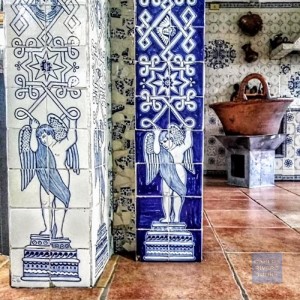
Talavera is more than pottery—it is a living tradition that embodies centuries of artistic exchange. Its story begins with Talavera de la Reina in Spain, where artisans perfected tin‑glazed ceramics influenced by Mudéjar aesthetics. These geometric and floral motifs trace their lineage back to techniques carried by the Arabs from Babylon, blending Mesopotamian glazing knowledge with Islamic artistry.
When the craft arrived in Puebla in the 16th century, it merged with local clay resources and indigenous creativity, giving rise to a uniquely Mexican expression. The mayólica tradition—a tin‑glazed earthenware popular across Renaissance Europe—provided the technical foundation, while Puebla’s artisans infused it with native symbols and colors.
Talavera also reflects the global commerce of New Spain: cobalt blue pigments imported from the Far East, Chinese porcelain influences, and trade routes that connected Mexico with Manila and beyond. This fusion of Europe, the Middle East, Asia, and the Americas created a ceramic art that is simultaneously local and universal.
For visitors and collectors, Talavera represents Puebla’s soul: vibrant, authentic, timeless, and deeply connected to a web of cultural exchanges that span continents and centuries.
Design & Pattern: “Malla Café” (Brown Mesh)
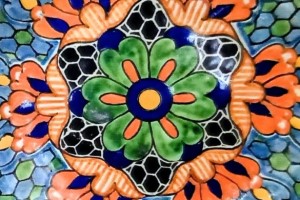
“Malla Café” design represents a modern reinterpretation of Puebla’s Talavera tradition, where artisans adapted the classic lattice (malla) motif into warm coffee tones. This palette evokes earth and rustic elegance, distinguishing it from the more common cobalt blue.
Over the last decades, Talavera painters have evolved in their styles. Some embraced innovation, experimenting with new colors and contemporary motifs to appeal to international collectors. Others remained faithful to the ancient designs, preserving the geometric and floral patterns that trace back to Mudéjar and mayólica influences.
Many of these master painters belonged to a “old school” of Talavera art—artists who have since passed away but whose work embodies the discipline, patience, and fidelity of traditional craftsmanship. Their legacy adds cultural and historical value to pieces like the “Malla Café” design.
Talavera Ceramics for Sale

